
Concrete Retaining Walls in Dallas, TX
Structural and decorative retaining walls that manage grade changes and protect your landscape.
What Are Retaining Walls?
A retaining wall has one job that sounds passive but is entirely structural: hold back a slope of soil that wants to move downhill. Get the engineering wrong and the wall doesn't just crack — it leans, bulges, or fails outright, usually after a heavy DFW rain event saturates the soil behind it and adds hydrostatic pressure the wall was never designed to resist.
That drainage behind the wall is the part most walls fail on, not the wall face itself. We build a gravel backfill zone with filter fabric and weep holes or drain tile behind every wall we construct, so water pressure has somewhere to go instead of pushing directly against the concrete. Combined with a properly sized reinforced footer below grade, this is what separates a retaining wall that lasts decades from one that needs replacing in five years.
North Texas yards often have exactly the kind of grade changes and erosion issues retaining walls solve — sloped lots near creeks and floodplains, backyards graded toward a foundation instead of away from it, or simply a desire to create a flat, usable terrace out of a hillside. We design each wall for the actual soil pressure and drainage conditions on your specific property, not a generic height chart.
What It Looks Like Working With Us
Site & Grade Assessment
We evaluate the slope, existing drainage patterns, soil type, and anything the wall needs to protect — a foundation, a patio, a driveway — before designing anything.
Engineering & Drainage Design
Wall height, thickness, footer size, and the drainage system behind it are calculated based on the lateral soil pressure your specific site generates, with a stamped engineering plan for any wall over 4 feet.
Footer Excavation & Pour
A reinforced concrete footer is excavated below grade and poured first, sized to anchor the wall and distribute its load to stable soil beneath the frost and moisture-active zone.
Wall Construction
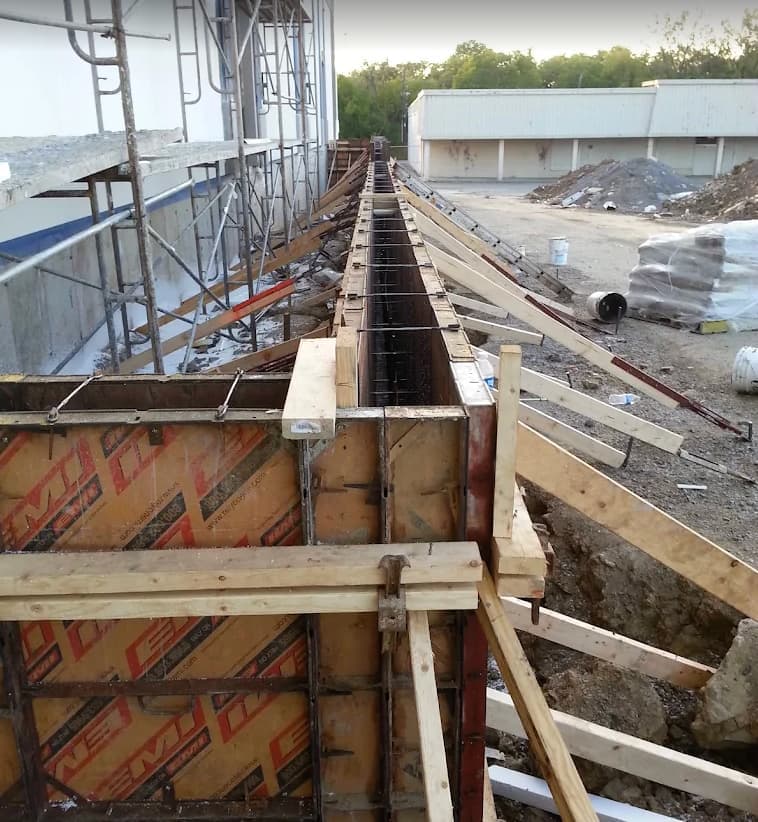
The wall is built up to design height with proper steel reinforcement, using either poured concrete or block construction depending on the design and your aesthetic preference.
Drainage Install & Backfill
Gravel backfill, filter fabric, and weep holes or drain tile are installed behind the wall, then backfill soil is placed and compacted in controlled lifts to avoid overloading the fresh concrete.
What's Included From Start to Finish
How Dallas Concrete Solutions Stands Out in DFW
Drainage-First Engineering
We design the drainage system behind the wall with the same rigor as the wall itself, since inadequate drainage — not weak concrete — is the cause of the vast majority of retaining wall failures we see in this region.
Experience on Steep DFW Terrain
From bluff lots near White Rock Lake to graded subdivisions on rolling Collin County terrain, we've engineered walls for a wide range of North Texas slope conditions, including tiered designs for significant grade changes.
Built for Heavy Rain Events
Dallas gets intense, fast rainfall that can quickly saturate soil behind a poorly drained wall — we size drainage capacity for real regional rain intensity, not a minimal code baseline.
Footer Depth Calibrated to Expansive Soil
Footer depth accounts for the active moisture zone in expansive DFW clay so the wall's foundation stays stable through the same wet-dry cycles that move everything else on the property.
Finish Options That Match Your Home
Beyond structural block, we offer form-finished and faced concrete options so the wall complements your home's exterior rather than looking purely utilitarian.
Who Benefits From Retaining Walls
Homeowners on Sloped Lots
A properly engineered wall turns an unusable slope into flat, functional yard space while stopping soil erosion at the same time.
Properties Near Creeks or Floodplain Edges
Erosion control is critical on lots adjacent to drainage easements or waterways common throughout the Dallas metro, and a retaining wall is often the most durable solution.
Homeowners with Drainage Flowing Toward the House
When yard grade sends water toward the foundation instead of away from it, a retaining wall combined with regrading can redirect that flow permanently.
Owners of Leaning or Failing Existing Walls
If an older wall — especially a timber or unreinforced masonry one — is bulging or leaning, we design a proper concrete replacement with correct drainage this time.
Homeowners Creating Tiered Landscape Beds
Multi-level retaining walls let homeowners build terraced gardens, patios, or play areas on lots that would otherwise be too steep to use.
Areas We Offer Retaining Walls In
Frequently Asked Questions
How tall can a retaining wall be without an engineer?+
What actually causes retaining walls to fail?+
Is a tiered wall better than one tall wall?+
Do retaining walls really need a concrete footer?+
How much does a retaining wall cost per linear foot?+
How long does a retaining wall project take?+
Ready to Start Your Concrete Project?
Get a free, no-obligation estimate for your residential or commercial concrete project in Dallas and surrounding areas.